Showing posts with label writing. Show all posts

Apr 23, 2015

Cody Kennedy Blog Tour


I'm letting these images speak for themselves.


Hello! Welcome!

I am so excited to have author Cody Kennedy visiting my blog today! It has been a long month of touring for him with his book, Slaying Isidore's Dragons, and this is one of the last tour stops—see all the other stops here, every one is FULL of useful information and facts. Especially the first one, the kick-off of this book tour, is near and dear to my heart. Don't miss it.

Today, Cody is going to tell us a bit about research and how to keep track of your findings when you're writing a novel and using quotes, be they copyrighted or not. There is so much more to being an author than meets the eye. Today, he explains what a Prove-up is, and why it is important to document your sources as you go along. Your editor and/or publisher will want to see that your method is good.

Cody is a constant help to so many authors, and he blogs and posts on social media with links with both great information and resources. Or, he simply posts links to inspirational images and thoughtful quotes. At times he posts about something really cool that happened to an author friend of his. As you follow his posts, apart from feeling his enthusiasm, you will soon start to notice that there is strict method to his work. It impresses me no end.

This is going to be a long post, so settle in, get a cup of coffee, and let's give the man a round of applause. He clearly deserves it. And if you click on the images, they should open up in a new window, bigger, and easier to read.

Cody, the floor is yours!

*****

What Is a Prove-up?

Let’s write a story and quote the words and phrases of others! Let’s not. Unless, of course, we’re willing to do it accurately, source the original work, and seek permissions if necessary.

When I write for youth, I like to educate them about things they may not have an opportunity to learn in everyday life. I do this by including bits of history, information about different cultures, and quotes from the literature of others—the latter of which isn’t as easy to do as it sounds.

As much as we may love Dr. Seuss, we can’t simply quote him in our works and be done with it. We must ensure that the quote is properly sourced, accurately quoted, available for use and, if not, to seek appropriate permissions. For me, and because copyright law is complex, the easiest way to determine whether a quote can be used is to determine when permission need not be sought. As such, I look to use quotes that are: 1) in the public domain and require no permission at all; or 2) fall within “fair use” guidelines. If you’re interested in knowing more about “permissions” and “fair use,” check out Jane Friedman’s blog. For purposes of this post, I’m going to speak only about quotes that do not require permissions.

I’m a huge fan of Edgar Allen Poe and love to use his quotes in my works. In that his works are in the public domain, no permissions are needed to use them. However, his trustees are alive and well and look to ensure that his works are accurately quoted. Setting aside, for a moment, that I am loath to misquote an author, it’s important to know how to source and prove up that I am not blithely using a quote that has been bastardized over time and am not attributing it to someone other than the original author! In other words, I must be able to prove up the source of the quote and quote it accurately.

According to Merriam-Webster the definition of prove-up in this context is: to bring proof of one’s right to something. As such, when doing a prove-up for an editor, you are not proving up your right to use a quote. You are proving up who holds the rights to the quotes; and that you are quoting it accurately.

I referenced Humpty Dumpty and quoted Edgar Allen Poe in Omorphi. With respect to Humpty Dumpty, I wrote this dialogue:

“The king’s horses did it. They weren’t in the original rhyme in 1797 and all of a sudden they show up, bang, unannounced, no preamble, no nothing, in the 1870 version. That proves my theory.” and the editor took issue with it.

Who would have thought I would have to prove up Humpty Dumpty? I had to because I referenced the work itself and obscure facts about the work that most people don’t know. The first thing I had to do was prove up the date 1797 and it looked like this:


Yes! I had to go all the way back to the first verse ever published! And it only went downhill from there. Then, I had to prove-up the date at which the horses appeared in the verse! And it looked like this:


And because I’m a glutton for punishment, I didn’t quote one Poe poem in Omorphi. I quoted many. And the prove-ups looked like this:


Yes! Every title and quote had to be sourced and the editor checked every one of them! THEN, the editor took issue with the slight difference in two stanzas. One stanza phrased as a question, the other as an assertion, and I had to prove that up to the editor too! It looked like this:


The prove-ups were somewhat time-consuming. However, in that I had checked the sources before I submitted the story, I had the links handy and it wasn’t hard to respond to the editor. When does it become a nightmare? When you don’t check the source before you submit your story to a publisher. Case in point, the G.K. Chesterton quote at the beginning of Slaying Isidore’s Dragons, which turned out not be a Chesterton quote. Sort of.

Here I was at the 11th hour being charged with the approval of the galley proof for Slaying Isidore’s Dragons and thought I would verify the quote—which none of us had done to date. OMG! I mean, yeah, it’s used in memes all over the place but, coming from the traditional publishing background that I do, and being OCD, I had to check it. And it’s a good thing that I did because I learned the citation for the quote was WRONG! As it turns out, Neil Gaiman had tamed and simplified Chesterton’s quote for his own work, Coraline. So the question then became: Whom am I quoting? The answer was both.

I’d never quoted an author within an author before and I had to look it up. For those who don’t know, we follow the Chicago Manual of Style (CMOS) in editing standards. However, the CMOS had nothing on quoting an author within an author. Another source, Turabian, did have the guideline and I was able to reference it to prove up how the quote should be cited in the book. It looked like this:


In sum, unless you can prove-up the use of copyrighted material in your work, don’t do it! Take the time to source the material and quote it accurately, and check to ensure you do not need to seek permissions to use it. You will be asked to do a prove-up for your publisher if your editor doesn’t do it for you.


Here is some interesting trivia for you:

All of Shakespeare’s works are in the public domain. If they weren’t, Westside Story and Shakespeare in Love couldn’t have been made.

The descendants of the Marquis de Sade have copyrighted “Marquis de Sade.” Dare I say that I wouldn’t want to seek permission for anything from that family?

The Marilyn Monroe picture series of her standing over a sidewalk steam vent with her dress afluff set landmark US copyright law. It was ruled that, because the pictures were used worldwide for everything from postcards to posters they were, in effect, in the public domain. The pictures themselves became icons and couldn’t be protected under copyright law.


Enjoy Slaying Isidore’s Dragons (and the three hours I put into sourcing Chesterton’s quote)!
Cody Kennedy, April 23, 2015


*****


And now, here is more about Cody's book! 
You know, the one everybody's talking about! 
The book you probably need to read, like, now!


*****


Slaying Isidore’s Dragons, by C. Kennedy


Blurb:

5 Best friends
4 Vicious brothers
3 STD tests
2 Guys in love
1 Car bombing
&
Nowhere to run

Slaying Isidore’s Dragons follows the burgeoning love of two high school seniors during the worst year of their lives.
Irish born Declan David de Quirke II is the son of two ambassadors, one Irish and one American. He’s come out to his parents but to no one else.
French born Jean-Isidore de Sauveterre is the son of two ambassadors, one Catalan and one Parisian. His four half brothers have been told to cure him of his homosexuality.
Declan and Isidore meet at the beginning of their senior year at a private academy in the United States. Declan is immediately smitten with Isidore and becomes his knight in shining armor. Isidore wants to keep what little is left of his sanity and needs Declan’s love to do it.


5 Weeks of hell
4 Attempts on their lives
3 Law enforcement agencies
2 Dead high school seniors
1 Jealous friend
&
A love that won’t be denied

One is beaten, one is drugged, one is nearly raped, one has been raped, they are harassed by professors and police, and have fights at school, but none of it compares to running for their lives. When the headmaster’s popular son attempts suicide and someone attempts to assassinate Declan’s mother, they are thrown headlong into chaos, betrayal, conspiracy, allegations of sexual coercion, pornography, even murder. And one of them carries a secret that may get them killed.


5 New family members
4 BFF’s
3 Countries
2 Extraordinary Psychologists
1 Courageous Mother
&
A new beginning for two young men in love


*****

Did that blurb interest you?
Read the first chapter of Slaying Isidore's Dragons here.


*****


Slaying Isidore’s Dragons released on April 9th, 2015

Add it to your bookshelves on:


Slaying Isidore's Dragons
 is now available in print and ebook at: 


*****


If you are interested in my (Anna's) review of Slaying Isidore's Dragons, here is a link to my review. Be warned. It comes loaded with five gushing stars. 


*****


About Cody Kennedy:
Raised on the mean streets and back lots of Hollywood by a Yoda-look-alike grandfather, Cody doesn’t conform, doesn’t fit in, is epic awkward, and lives to perfect a deep-seated oppositional defiance disorder. In a constant state of fascination with the trivial, Cody contemplates such weighty questions as: If time and space are curved, then where do all the straight people come from? When not writing, Cody can be found taming waves on western shores, pondering the nutritional value of sunsets, appreciating the much maligned dandelion, unhooking guide ropes from stanchions, and marveling at all things ordinary.

Check out more about Cody on his Blog.
Follow Cody on:
FacebookGoodreadsTumblrPinterestElloGoogle+.
Find him on Twitter @CodyKAuthor, and read his free serial story, Fairy.


*****


I would like to end this book tour post with a gushing, dancing, fangirling OMG OMG OMG


for Reese Dante, who made the cover and all the images that accompany this book, and also the book before this one, Omorphi. Amazing skills. Such beautiful work.


A beautiful cover is what makes me stop and want to read the book—get it right and I'm already on your team, author.


*****


Do you want to ask Cody a question? The comment field below is yours!


Thanks for stopping by. See you soon!

Anna


Mar 17, 2015

Free Webinar on PR and Booksales


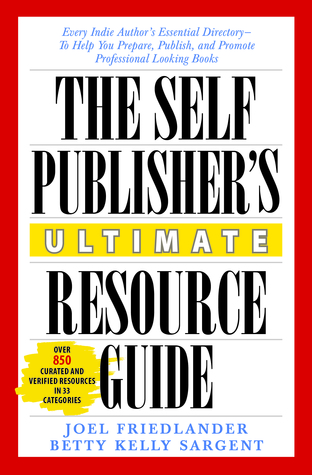
I read a cool resource book for indie-authors called


The Self-Publisher's Ultimate Resource Guide, by Joel Freidlander and Betty Kelly Sargent


(Click on the title to go see my review of it).


Now, this man, Joel Friedlander is giving a Free Webinar on Media Kits for launching your books.


Here, in his own words:

One of the fastest ways to improve your book marketing, your book launch, and your media exposure is to make sure you've got a complete and easily available media kit.But too many authors skip this crucial step in promoting their book. And that's too bad.And I think I know why authors don't take on this task—they just don't know how to go about it.Let's face it, the one thing you absolutely need to sell books is exposure. That's where the media comes in.Media like newspapers, ezines, blogs, magazines, radio hosts, TV shows already have millions of readers and viewers.And your media kit is the essential link between you and the media that can help you tap into these resources.Joan Stewart (also known as "The Publicity Hound") knows more about getting attention for your books and programs than anyone else I know. She runs a popular blog and worked for many years as a newspaper editor.This Thursday, March 19 at 4:00 p.m. Eastern, Joan and I will once again present a free webinar to walk you through each element of your media kit.Joan is an amazing presenter, and we'll cover a lot of ground in this 1 hour presentation. At the end, I'll introduce you to a product we've got that will help you put together your own media kit.The webinar is free, and it will be packed with instruction, tips, and some of Joan's best stories from her years on the front lines. You won't want to miss this.
The last time we ran this webinar, we got comments like:
"I learned a lot of information, fast!"
"Extremely helpful and informative!"
"Amazingly thorough!"
So make room on your schedule. Here's the link to register for the webinar. Like all webinars, seating is limited, so go over and grab your space now.The Indie Author's Guide to Creating a Killer Media Kit 
See you Thursday!
(Even if you can't make it on Thursday you should register because we'll be sending out a link to a replay on Friday.) Best,
Joel

I think we should all attend. And the best part is, you don't have to be there for the live event—just sign up now and watch it when you have time.


~ ~ ~ ~ ~ ~ ~ ~ ~ ~


How about you
Will you be attending? 


Feb 14, 2015

Alive Again - Valentine's Day

I take a shallow breath. Everything hurts. That must mean that I am still alive. This is paramount. This is all that matters, for a moment. I feel every, single part of my body, there is a pain so excruciating that I don't even know where I am. I am coming out of the haze, and try to move. It is impossible. I am folded in two on a small bed in a hospital, and all I can do is moan.

Somebody hears me, and comes closer. I feel a hand on my hair, and a quiet voice asking me how I feel. I want to say like total, utter crap, but I can't even take the deeper breath I need to be able voice my pain. So I moan. It ends with a whimper. I have never felt so defenseless in my whole life.

The kind soul attached to the caressing hand tells me not to worry, and fiddles with the IV, and within half a minute I am floating again, slowly leaving the pain behind me. I remember now, I know where I am and what happened. Opening my eyes I ask her with a whisper of a voice "Anything left?"
"You need to talk to the surgeon, dear." She moves closer so that I can see her. "He'll be coming to talk to you in a couple of hours. Sleep now, it's the best cure."
"Mmhm." I am lost in my drug-induced haze. "Just tell me, is it all out?"
"Yes. All of it."

That's it, it's all gone. I am happy and sad and have a head that feels like cotton wool. I fall asleep knowing that the next time I wake up, I will have to take reality by its proverbial horns again. But not now, not right now. For now, I can lie back and just give in to the feeling within me that says: "Somebody else is in charge. Relax. Sleep."

And I do, because someone else was in charge; a hysterectomy is not an elective surgery. You do it when they tell you to. And it hurts like a bitch, in every way.
At the hospital, and after, at home during my convalescence, I start reading a series of books that I have been wanting to read for a long time. I never could find a long enough stretch of time in front of me in which to indulge; work and life are always getting in the way. Now I throw myself in, nothing holding me back.

Weeks later, my books are finished. I have read all of them, several times over, and I'm searching the net for more, anything, more, I need words, more words. I need more words telling me it'll be all right, words to pull me through, to tell me there is life, words to make me believe in magic again.

I find them on a writing forum, where thousands of—mostly—women are baring their souls for everyone to see, and are posting story after story. I find it remarkable, especially as many of these stories are exceptionally good. Some are terrible of course, but there's no need to linger. I move on to the good ones.

I find the words I was looking for there. The words I need, search and hope for. The words that heal, soothe, the words that care for me and make me care. Then I also find the words that make me happy, that make me squeal and scream out loud. Because a good story is when—while sitting there in your armchair reading something that is exceptional—you just have to look away for a second and say "Fu-u-ck!" out loud. Then go back to reading.

A good story takes you somewhere else, and when you come back to your own life, it is fuller, more colorful and more your own. It is a kind of magic. It is like new curtains on your soul, it brightens up the room that is your life.

One night, I stay up late to watch a movie, it is beautiful, and at the end I am simply staring at the titles that roll up, up and disappear. At the very end, when even the dolly-grip boys have been duly thanked for their job, right there, is a song that catches my attention, a song which sends me completely out of the real world.

Who would have known? They blow my mind, their song takes my breath away. I am traveling, in my mind, to new places, new sights, new everything. What is happening? Why? And then I realize the question should be Why not?
I start asking myself Where did my music go? When did I stop listening to ear-deafening drums and hard guitar riffs? I have no answers, so I turn everything off and start doing some long-needed soul searching, right there in the middle of the night.

Looking back, I can see where taking a left turn—then left again, and then right, and left once more—has made me into the person I am today. This is not necessarily a bad thing, it is just something that I will have to take into account. To change something, especially if that something is yourself, you need to get accustomed to what is.

If you don't know who and what you are right now, in no way can you influence who and what you will become tomorrow. It's simple math, really.

I realize I need to make sure I take some correct left-right-left-turns in the very near future, because somewhere along the way, I have stopped caring; I have stopped caring about myself, about what I wear, about what I look like every day. I've stopped caring about where I am going, and what makes me happy.

Somewhere along the way I stopped caring about myself. Completely.

My hair started turning partly grey, and instead of fighting it and doing something about it, I cut it all off, to a shorter, more age-appropriate length. Or so they said. Too bad it also pushed me into that mind-frame of old, into this sinking feeling that tells me it is all mostly over.

Besides, with forty pounds of extra padding, I suddenly look at myself and see that I look and feel nothing like how I used to feel, nothing like the old me. I am just old. Not me. The old me? Right out the window.

I keep reading story after story, and suddenly discover that I can also speak directly to the authors. Not only that, the first time I try to send a short review telling the author how much I have enjoyed reading her story, she answers back within half an hour. This is a new, exhilarating experience. We chat back and forth in short messages on the forum, and suddenly I feel part of something bigger. I am talking directly to an actual author. My field is linguistics, I give her a hand with a couple of sentences in Italian. Next thing you know, she has thanked me in public in her story chapter. My name is up there, where all of their names are.

Up there with all of those fabulous writer people whom I admire so much.
I am somebody. And someone appreciates my help. I am seen.

This does something to my brain; I don't know what happens, but suddenly—instead of just passively looking at things, seeing life and years pass me by—I am right there, in the middle of it, living it. How such a small thing like a mention of your name can stir your soul, shake you right back to life, it is uncanny.

I start to write myself. Oh, my production of words is absolutely craptastic the first months, sentences flow like elephants trying to do a fast Samba. It rocks so bad, I actually laugh out loud right there where I am sitting in my armchair, laptop heating up under my fingers.

That laugh scares me, because I realize I don't even remember the last time I heard myself laughing out loud. And I want to hear more of it, much more, I want my laughter to come back and seize me, kick me, shake me into that happy stupor that only laughter can provide. Of course, it doesn't, not yet, I'm still baby-stepping here. But I see that that is where I would like to be in a few months' time: I want to be in a place where laughter comes fast and easy. And hard. Life-giving laughter.

I buy an iPod, a bright orange one. It is a thing of beauty, it screams this goddamn isn't over yet in a loud voice. I realize that the last time I walked with music in my ears, I was still using cassettes.

I buy tons of music—one song pulls the next, and while one band screams about my redemption and absolution, the next one tells me to chill, relax, go with the flow. I float and delve into the feelings that emerge out of these long-forgotten depths. My neighbors wonder what has gotten into me—they see me pass in my small car, where everything is vibrating with roaring guitars and crazy drums.

Music makes me feel alive; I finally rock. And I swear, my new iPod is psychic. I just put it on shuffle, and we are off—it knows exactly what I need to hear on any given day.

I keep reading, of course, but with new eyes, critical eyes, searching eyes, I seem to be filtering what I am reading from the standpoint of trying to be a writer; I am not just a reader anymore. I decide to stop reading any story that I feel is badly written, that I don't absolutely love at once. I concentrate on reading those that speak directly to my heart. I want to learn from authors who write correctly, authors who respect me enough to actually care about my reading experience.

As there are close to two hundred thousand stories to choose from on the forum, I decide to become a picky reader, and only spend my time on the ones that have a message of some kind. Preferably a message of love is love. Of the powerless finding power. Or of friends standing up for each other.

Instant pay-off. Words flow beautifully, both before my eyes and through my fingers. I read stories of great personal development and love. I write things that make sense and that might actually be interesting also for other readers.

Some days it is like I have been blessed with automatic writing, like someone is dictating the words to me and all I have to do is take them down, as fast as I bloody well can. My fingers are rushing over the keyboard, it is exhilarating, it makes my blood flow faster, it is fun and I suddenly stop. Hold my breath. Then let it all out in a huge guffaw of Happy. Pure and true happiness fills me.

I rattle off messages to some of the new friends I've made, and they all tell me they know exactly where I am, what happened to me; they have all been there, in the Writing Zone, and they welcome me into their fold. It is like truly finding a long lost family.

It is like finding your pack, the people you need to be able to run free again.

One of my new friends helps me with editing, she shows me where I stumble and where I am steady. It is sheer brilliance, this giving freely of knowledge and time. It thrills me to hear her say that she loves my first story. That she is crazy-proud of what I wrote. And it makes me feel like a million dollars when she later asks me if I would take a look at something she has written. Not that I'd be doing the editing, but I can perhaps help by being a new set of eyes on her text. It feels like something really big. She trusts me. I am worthy. No words can describe what all that does to me. No words.

I travel a lot in my work. There is a lot of empty time in traveling, and this is time that I now use for reading or writing, and for listening to ear-deafening rock music, courtesy of my beta who is also a music fanatic. She shares more up-to-date music knowledge with me than I can actually keep up with, bless her heart.

Crossing the Rockies, the airplane I am on hits some really serious and quite scary turbulence, with the whole airplane doing a couple of dives that almost turn my stomach inside out. The lady sitting in the seat beside me goes white, and simply whimpers. She is so afraid she is incapable of even voicing a full-out scream. I take her hand and look her straight in the eye and say "Listen. We are all right. And we will be all right. Everything is all right. Whatever happens, it is all right."

She holds on to my hand like it is a lifesaver, and perhaps it is. Perhaps the single, simple gesture of taking the hand of a fearful stranger actually is a lifesaver.

I realize right then, that after all is said and done, I am all right. Even if it should all end right here, right now, I am okay. I have lived, I am living. I have loved and I am loving. If it is time to go right now, then I'm okay with that, too. It is with a huge sense of relief that I just sit through the whole ordeal, holding her hand. I am at peace. It feels wonderful.

It is quite an anticlimax when we, some ten minutes later, come out of the turbulence, and we smile at each other, a little shy and a little happy. I slowly let go of her hand, giving her a last squeeze, and she leans toward me, and says, "Thank you for being real. For being a rock. I will never forget you."
Two huge tears leave my eyes as I look back at her and say, "No worries at all. I've been there. It's all in the perspective. It's all in the love. Spread it on down the line." My smile widens to a full-on grin when I see how she gets it, she really gets it.

Ah, perhaps I have managed to give to someone else what has so generously been given to me? Have I managed to send strength and courage to one woman in my life, I shall consider myself happy and good. Fulfilled.

We land in Toronto. We part ways. We will never meet again, and we will never forget.

My hair has grown back out. I care for it and for myself again. When I open my laptop, I once more see myself in that black, start-up screen, not some old woman. I look fifteen years younger; somehow, just coming alive again has left me thirty-five pounds lighter and I am beautiful, I feel beautiful. I am alive.

I have a new, secondary family of strong, fabulous women who have helped in holding me up for the better part of two years. Some of you do not even know how much you have done for me. All your stories have given me hope, love and a will to keep on trucking. I know that I am living. It's ok. It's good. I'm good.

You are all a part of something I need. You are like family. You are friends. Like lovers. Teachers. Buddies. Crazy fun people. Cuddlers to hold me when I'm down. Happy dancers for when I'm up. And most of all, you are instant—instant friends, I just turn on my laptop, and instantly find any one of the more than a hundred women I love and speak to regularly.

I had no idea that a group of women—spread out all over the planet—could become so important to me. And I never knew I could make such a difference in your lives. Without even having met 99% of you sweet people, you have nestled yourselves into my everyday life, and it would be so much more grey without you.

Thank you for writing stories for me, ladies. You have saved my life, several times over.

It is once again Valentine's Day. I know I have never faced a better one than this year.

I hope yours is too—full of music.
Magic words.

Sisterhood.

And life.
Hot, sizzling, awe-inspiring life.

Will you be my Valentine, sweetness? 


February 14th, 2015:

Five years later, and I am still thankful for all of you. Some of you may have read this last year—or the year before—or the year before that.

So many new people have come into my life since then, I thought I would give it to you here on on my blog, too.
(Originally posted on Fanfiction.net on February 14th, 2012).

Alive Again, ©AnnaLund2011

Jan 21, 2015

Reviewing

It takes me three hours
to write two reviews
Some days, as I sit down to review the wonderful books I've read, I feel pushed to perform.
Like a monkey, Jump here, Do that, Write this, Feel this.

And some days, like today, I am afraid that you will think that this is what I want you to do when you read my reviews.
That I want you to love this book as much as I did.
Or that I want you to hate it, too.

I do not. I want to simply express my own, personal reactions to it, and I want to tell you about them.

What you think of the same book is completely your business.

And some days, reviewing seems like so much work.

Do you know that it takes me almost three hours to write two reviews?


~ ~ ~ ~ ~ ~ ~ ~ ~ ~


How about you? Tell me, how long does it take you to write a review? And are people bugging you when you do?


Dec 15, 2014

On writing

Ah, Sandi. http://sandyquill.com
Last summer, I was messaging back and forth with author Sandi Layne about the pain of writing, and suddenly realizing that I was turning myself inside out in the story I had just finished, sharing so much of myself I felt quite lost.

She sent me the above message in response. It was my birthday, and what a gift.

Anyone who receives a message like this should feel heartened. Uplifted. Should feel slightly better. Because there is such truth in these few words.

But at the same time, it kind of kills you, because let me tell you, I am not a courageous woman. I have done a gazillion things in my life, mostly because I am stubborn and hardheaded and use sheer force of will to march through obstacles, but doing it just with and by courage?

Never.

Until writing happened.

Writing is probably the most courageous I have ever been, or ever have had to be. Because every time I try to cut corners and write for an audience, it falls flat on its face.

Just as, every time I try to write from the bottom of my heart, something happens and my words get wings. When I write to write.

~~~~

So much courage is needed to spill your heart out onto the blank pages of a piece of paper—or onto the screen of your computer, as it were. Nothing more daunting than that empty word document, cursor blinking in the upper left corner, waiting for you.

Even more courage is needed to later edit the living daylights out of the baby that you have birthed through pain and labor, but also through cackling glee and awesome rush of happiness.

You use your sadness. You write your anxiety. You make the reader live the drama that happened. Your strongest writing comes through, loud and clear, when you describe disaster striking. When a whole life crumbles in the chaos and madness of destruction.

When those things have happened to you, for real and in your life, you can either despair and go under, or you can USE IT in your writing. Or both. There is power in despair, when it most certainly can get no worse, it can only get better.

You have such power in your words. When you tap that specific river of personal knowledge. When you use it, and turn it around from having been something that hurt you (emotionally or physically) into something that whispers to people who are reading your words, whispers, until they themselves scream out loud—

“This is truth—this is real—OMG—I am IN THIS SCENE with the author, feeling her feelings, and seeing what she sees! I am dying, running, screaming, fainting, loving, hating, seeing, feeling utterly lost and blind. Everything. I experience everything.”

That. Is. Powerful. Magic.

There is such enormous power in that kind of writing.

To revisit your demons in writing is cathartic. You get to go there again, but you have the power now, and with millimeter-precision, you can excise the hurt. Turn the whole incident into something that YOU created, that YOU have power over, that YOU can use.

There is true greatness when, in the process, you get to take back your power.

It is how I deal with pain. I use it. Manipulate it. Force it, until it is totally mine and in a place where I can do with it as I please.

Those are powerful feels.

I know you see it. There is power to be had here. I hope you use it.

Because when you tap into that source, my friend, you get handed a pair of huge, huge wings—the kind that make you soar.

You f*cking soar.


Nov 30, 2014

Winner — National Novel Writing Month 2014


I did it again.

Gobsmacked.


My NaNo page—please, come be my friend there, and let's do it again this coming November!


~ ~ ~ ~ ~ ~ ~ ~ ~ ~


How about you? Have you done the NaNo-thing too? Want to tell me about it?


Nov 18, 2014

Pet peeves of a grammar nerd: Lie/Lay

Ginkgo tree (Ginkgo biloba) 

Hello, fellow grammar nerds!

Today, thought we'd talk about Mr Down, because apparently, a lot of people want to lay him.

No, wait, hear me out!

This is how I make sure I remember how to correctly use the verbs Lie and Lay, respectively.

Here is the deal:

Lie - Lay - Lain - Lying (as in: I lie on the couch now, I lay on the couch yesterday, I have lain on the couch for a week, I am lying on the couch)
and
Lay - Laid - Laid - Laying (as in: I lay the book on the couch now, I laid the book on the couch yesterday, I have laid the book on the couch every day, I am laying the book on the couch)

They are two different words. They mean different things. They act in different ways. They are not interchangeable. One doesn't need an object (the first one), and one absolutely needs an object (the second - the book).

So where does Mr Brown come into this whole mess? Well, when you write "I am going to lay down," it is wrong. Because it makes the word "down" into an object to be laid. What you wanted to say was, "I am going to lie down."

Let's turn down into Mr. Down, to see the error: when writing a sentence with lie/lay, use Mr Down. If it looks like you're having sex, you're using the wrong verb. 

So, every time I see someone writing "I'm going to lay down," I quickly ask myself:

"Who is this Down that everybody wants to lay? And can I have his number?"

The correct way to say it is: "I am going to lie down."


~ ~ ~ ~ ~ ~ ~ ~ ~ ~


How about you? Tell me about your pet peeve in the grammar jungle?! 


Oct 22, 2014

Pet peeves of a grammar nerd: On to/Onto

From MorgueFile, by Natureworks

Hello, fellow grammar nerds!

Today, I want to talk about On to, and Onto.
Because, you see, they are not the same. The two not interchangeable.
They are two different animals completely, and the jungle needs them both.

To decide which one to use, ask yourself:

AM I actually putting/walking onto something? Like, "I walked onto the terrace." Or, "He threw the book onto the desk." Or, "She stepped onto the stage."

Because, if you can swap it for "upon" you can certainly use "onto."

But if it doesn't mean "upon," then it is because it is not behaving as a true preposition...because "on" is often a particle in a verbal phrase. Yup. It hangs out with verbs. It sticks to the verbs, instead of sticking to its brother "to."

It can be as easy as this: "I hang on to hope," where the verbal phrase is "to hang on (to something)." You don't "hang upon hope," so it's not a preposition.

It's a particle in a verbal phrase. It belongs to the verb. The verb gets upset if it settles with the late-comer "to."


So, rule of thumb: If you can swap it for "upon," then you can use "onto."
If you can't, then use "on to."


~ ~ ~ ~ ~ ~ ~ ~ ~ ~


How about you? Tell me about your pet peeve in the grammar jungle?! 


Apr 22, 2014

Pet peeves of a language nerd: translation vs. interpretation

From MorgueFiles, by mconnors

Hello, fellow language nerds!

Today, I want to talk about the fact that so many people still think that translation is the same thing as interpretation.

The two skills may seem to be the same, but are, in actuality, two very different ones.

Not only that, but these skills appear in two wildly different kinds of people: an introvert perfectionist thrives as a translator, when an extrovert communicator is the perfect person to become an interpreter.

Let's straighten the concept out a little bit:
Simply put, translations deal with the written word,
whereas interpretation deals with the spoken word.

The translators sit quietly in their offices, translating, using dictionaries and resources at will—it is a perfect job for our introverts. They can sit there for hours, going back and forth, perfecting the phrase and making sure all the technical terms are Just So.

The interpreters are is usually out and about, in settings where their services are needed: in a booth at a conference, with headphones and microphone. Or standing beside the client whispering a rendition of the words being said in the client's ear, called chuchotage.

An immigration officer may call upon an interpreter to have a conversation with a person who might be seeking asylum.
A translator is often called, too, to translate the documents the potential asylum-seekers bring with them.

To interpret, you need to be fast as a flash, have a wild memory for the smallest details, and not be prone to losing your thread. Because if you lose it, in this setting? You lose your job.

To translate, you need to be a perfectionist and a nit-picker, and you will probably work mostly toward your mother-tongue, as it is nigh-on impossible to be an excellent translator in both directions.


So there you go, the difference between Interpretation and Translation.


~ ~ ~ ~ ~ ~ ~ ~ ~ ~


How about you? Did you know this?
Tell me about your pet peeve in our language jungle?!